
Transactions and trades
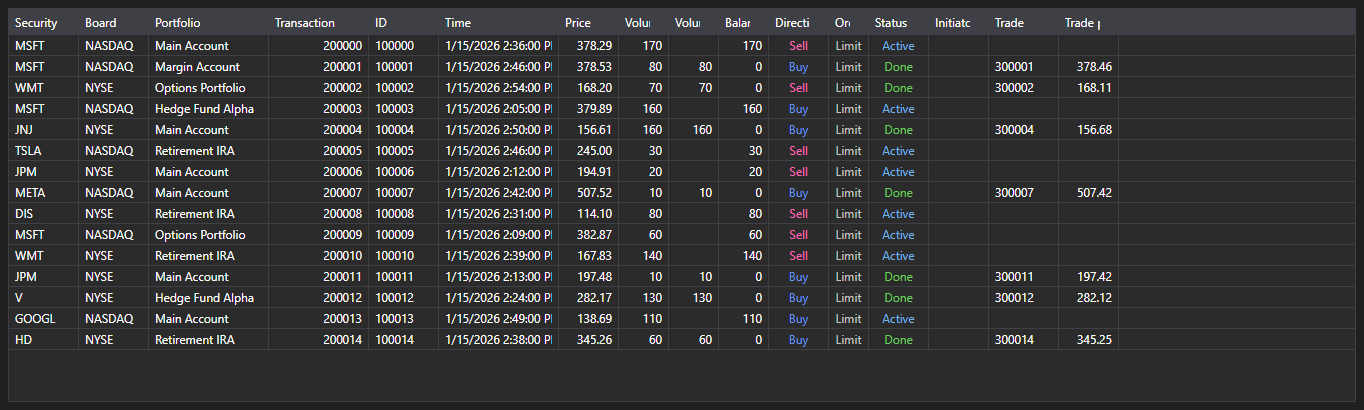
ExecutionGrid - a universal table of ExecutionMessage messages. A single control shows tick trades, order log and own transactions - the kind of data is set by ExecutionMessage.DataTypeEx.
Main properties
- ExecutionGrid.Messages - list of messages.
- ExecutionGrid.SelectedMessage - selected message.
- ExecutionGrid.SelectedMessages - selected messages.
- ExecutionGrid.MaxCount - maximum number of rows in the table; the oldest rows are removed once it is exceeded.
Since the same table serves three kinds of data, the columns that are not needed are hidden by ExecutionGrid.HideColumns: ticks do not need order columns, the order log does not need own trade columns.
Below are code snippets showing its usage:
<Window x:Class="Sample.ExecutionsWindow"
	xmlns="http://schemas.microsoft.com/winfx/2006/xaml/presentation"
	xmlns:x="http://schemas.microsoft.com/winfx/2006/xaml"
	xmlns:xaml="http://schemas.stocksharp.com/xaml"
	Height="400" Width="900">
	<xaml:ExecutionGrid x:Name="ExecutionGrid" />
</Window>
// Keep only the columns related to transactions
ExecutionGrid.HideColumns(DataType.Transactions);

// Add orders to the table on the user interface thread
_connector.OrderReceived += (subscription, order) =>
	this.GuiAsync(() => ExecutionGrid.Messages.Add(order.ToMessage()));

// Limit the table size
ExecutionGrid.MaxCount = 100000;